

YU Sleep side effects are a fair thing to understand before adding any supplement to a nightly routine, especially one meant for regular, ongoing use rather than just occasional use. This looks honestly at YU Sleep’s ingredient safety profile, who should be more cautious, and what a reasonable approach to nightly use looks like.
Click here to learn more about YU Sleep
Why Nightly Use Is A Different Question Than Occasional Use
A lot of supplement safety discussions focus on whether something is safe to take once. That’s a lower bar than asking whether it’s safe to take every single night for weeks or months, which is how a formula like this is actually meant to be used.
The good news is that most of YU Sleep’s core ingredients, melatonin, magnesium, L-theanine, GABA, have long track records specifically around nightly, ongoing use, rather than just single-dose safety data. That’s a meaningfully different and more relevant kind of evidence than what backs a lot of newer supplement ingredients.
Melatonin And Nightly Use
Melatonin is the ingredient people are most likely to have questions about regarding long-term use, partly because it’s a hormone rather than a vitamin or herb. Research on nightly melatonin use, particularly at lower doses like the 0.9mg used here, generally supports it as safe for extended use in healthy adults, without the tolerance-building concerns associated with higher doses.
The lower dose approach matters here specifically because it’s closer to what the body produces naturally, rather than repeatedly overriding the body’s own production with a much larger external dose every night.
Who Should Be More Cautious
Being direct about potential YU Sleep side effects and limitations matters more than glossing over them.
Anyone pregnant or nursing should avoid this or any sleep supplement without speaking to a doctor first, since safety data in these populations is generally limited for most supplement ingredients.
Anyone on prescription medication, particularly sedatives, antidepressants, or blood pressure medication, should check with a doctor before combining them with a formula containing melatonin and GABA, since interactions are possible even if uncommon.
Anyone with a diagnosed sleep disorder like sleep apnea should be working with a doctor on that condition directly rather than relying on a supplement, which isn’t designed to address a diagnosed medical issue.
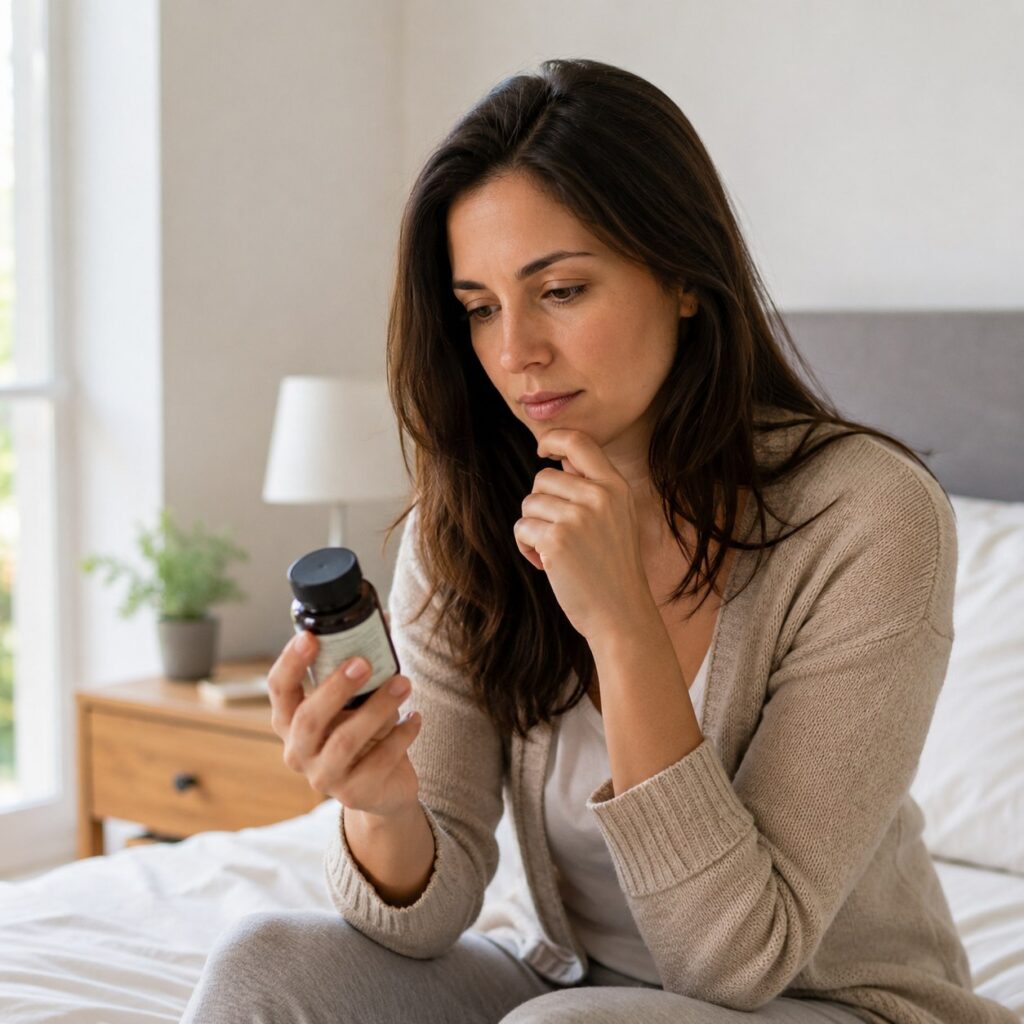
How This Compares To Common Sleep Medication Side Effects
It’s worth putting this in context against what people are usually more familiar with, over the counter sleep aids and prescription sedatives, since that comparison makes the actual risk profile clearer.
Antihistamine-based sleep aids, the most common OTC option, are well known for next-day grogginess, dry mouth, and, in some cases, increased confusion with regular long-term use, particularly in older adults. Prescription sedatives carry their own set of concerns around dependency and withdrawal with extended use.
By comparison, the ingredients in a natural sleep support formula are generally associated with a milder side-effect profile precisely because they’re not designed to induce sedation. The most commonly reported issues with formulas like this tend to be mild and short-term, occasional next-morning grogginess if taken too late, or mild digestive adjustment in the first
few days, rather than the more persistent effects associated with stronger sedatives.
This doesn’t mean zero risk; every supplement carries some possibility of an individual reaction, but the
overall risk profile sits meaningfully lower than what people are often more worried about avoiding in the
first place.
What A Reasonable Nightly Routine Looks Like
For most healthy adults without the concerns above, taking a formula like this consistently at the same time each night, alongside reasonable sleep hygiene rather than as a replacement for it, is a reasonable and low-risk approach.
The ingredients here are dosed to work with the body’s natural sleep process rather than force sedation, which generally makes for a milder safety profile than stronger over the counter sedatives, but it’s still worth paying attention to how your own body responds in the first week or two of use.
Check current YU Sleep pricing and availability here


We research health supplements and morning routine strategies to help you make informed decisions. Every review on this site is based on thorough ingredient research and genuine customer feedback. No hype. Just honest information.